Why your car is worth less every month
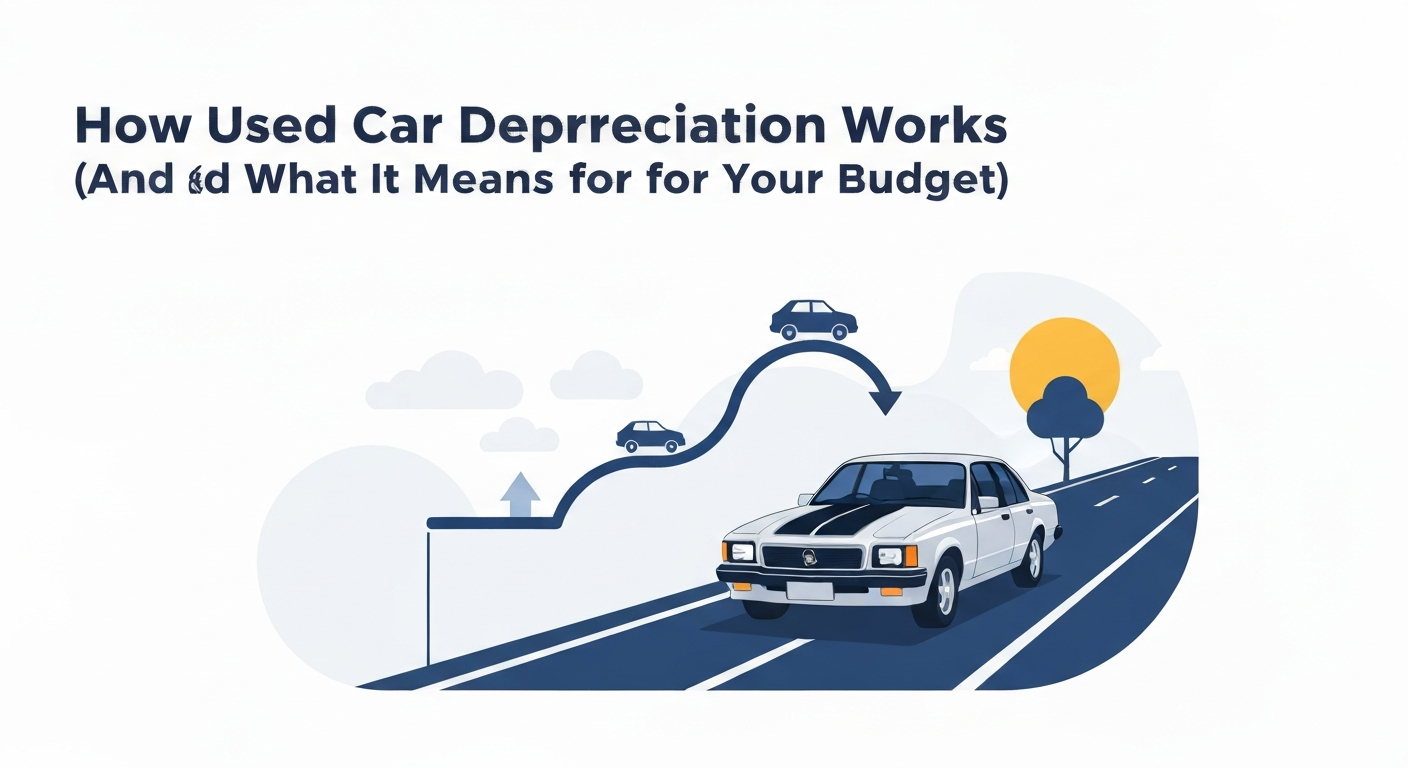
The moment you drive a new car off the lot, it's worth less than you paid. This isn't a myth — it's the most predictable financial event in car ownership. New vehicles in Australia typically lose 15–25% of their value in the first year alone, and 40–60% over the first three years.
Understanding this curve doesn't just satisfy curiosity — it directly affects how much you should pay for a used car, when to sell yours, and whether that 'great deal' on a 12-month-old vehicle is actually worth it.
Use the Used Car Value Calculator to estimate what a vehicle is worth at any age based on its purchase price and depreciation rate.
The depreciation curve: what it actually looks like
Depreciation is sharpest in the early years and flattens as the car ages. A typical pattern for a popular Australian model might look like this:
- Year 1: Loses 20% of purchase price (new → 12 months)
- Year 2: Loses another 12%
- Year 3: Loses another 10%
- Years 4–7: Loses 6–8% per year
- Years 8+: Decline slows significantly; some vehicles reach a floor
On a $45,000 new car, you'd be looking at roughly $36,000 after year one, $31,700 after year two, and $28,500 after year three. The car has already shed $16,500 in value before its first major service interval.
The sweet spot for buying used
The best-value window for most buyers is 3–5 years old. By this point:
- The steepest depreciation has already happened — you're not the one absorbing it
- The car is still modern enough to have current safety features and reasonable fuel efficiency
- Most manufacturer warranties have expired, but the vehicle is young enough to be reliable
- You can usually still get logbook servicing and parts at reasonable costs
This is why 3-year-old ex-lease vehicles are so popular in Australia. The original buyer absorbed the worst of the loss; you benefit from a lower purchase price on a well-maintained car.
Factors that accelerate depreciation
Not all cars depreciate at the same rate. These factors push depreciation higher:
- High annual kilometres: Every 10,000 km above average (around 15,000 km/year) reduces resale value
- Unpopular colours: Unusual colours (green, brown, orange) sell for less than white, silver, or black
- Luxury or prestige brands: High-end European cars often depreciate faster than Japanese reliability brands
- Diesel passenger cars: Declining demand for diesel in urban areas has accelerated depreciation on city-spec diesels
- Accident history: Even properly repaired vehicles take a significant value hit on their PPSR or CarHistory report
What slows depreciation
Some vehicles hold value better than others:
- Toyota, Lexus, and Mazda: Consistently strong resale in Australia due to reliability reputation
- Utes and 4WDs: High demand from tradespeople and regional buyers keeps values elevated
- Low-kilometre examples: Under 10,000 km/year commands a meaningful premium
- Full service history: Logbook servicing at authorised dealers protects resale value
Keeping your car clean, serviced, and well-maintained is directly worth money at resale. A quality car care kit — see car detailing kits on Amazon Australia — pays for itself many times over if you ever plan to sell privately.
Running costs compound the true ownership picture
Depreciation is the biggest single cost of car ownership, but fuel and running costs aren't far behind. Use the Fuel Cost Calculator to factor in fuel spend over your ownership period, and the Car Loan Calculator if you're financing the purchase. Looking at all three numbers together gives you the real cost of ownership.
Timing your sale
If you own a car and are thinking about when to sell, the answer is almost always: sooner is better, provided you've absorbed at least 2–3 years of initial depreciation yourself. Selling a 3-year-old car privately typically nets more than selling a 6-year-old car, even accounting for the extra years of use. The drop in depreciation rate at 5+ years is real, but by then accumulated wear and buyer nervousness about reliability starts eroding private sale prices anyway.